
Choosing the right builder is one of the biggest decisions you will make during any home improvement project.
Whether you are planning a house extension in Kent, a loft conversion in London, or a full renovation somewhere across the South East, the builder you choose will have a huge impact on your budget, timeline, stress levels and final result.
A good builder can make the process feel organised, transparent and manageable. The wrong builder can lead to unclear costs, delays, poor workmanship and difficult disputes.
That is why it is so important to ask the right questions before signing a contract.
A proper conversation at the start can help you understand exactly what is included, how the project will be managed, what happens if things change, and whether the builder is the right fit for your home.
This guide sets out 15 important questions to ask a builder before committing to a project, along with what good answers look like and the warning signs to watch out for. Use it as a practical hiring a builder checklist before you sign anything.
1. Are You Fully Insured?
Insurance should be one of the first things you check when choosing a builder.
Building work carries risk. Even with a careful and experienced contractor, accidents can happen. Damage to your property, injury on site, or issues caused by subcontractors can quickly become expensive if the right insurance is not in place.
A professional builder should be able to explain what insurance they hold and provide evidence if requested.
What a good answer looks like
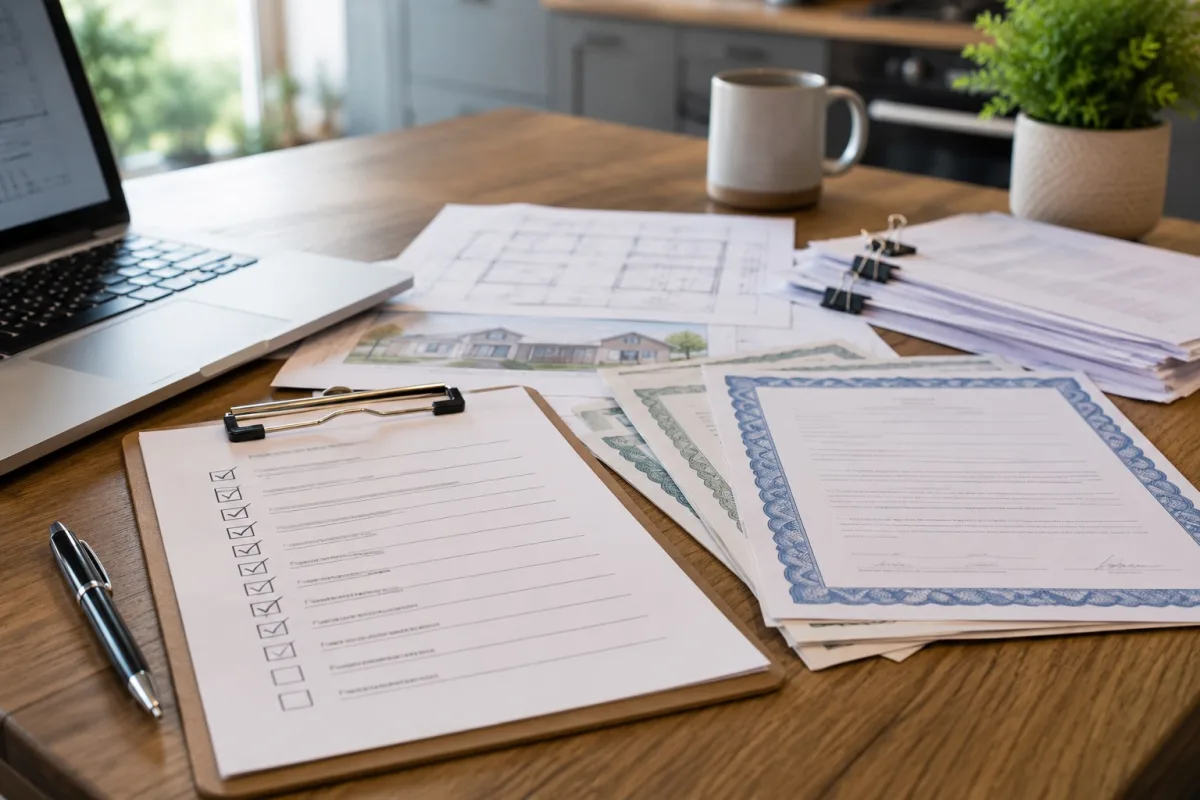
A good builder should have suitable insurance for the type and scale of work being carried out. This may include public liability insurance, employer's liability insurance if they employ staff, and contractors' all-risk cover for larger projects.
They should be comfortable sending you copies of their insurance certificates and should not treat the request as unusual. For example, if you are planning a rear extension in a terraced house in London, where access is tight and neighbouring properties are close by, insurance is especially important.
Warning signs
Be cautious if the builder gives vague answers, says insurance is "not needed", or refuses to provide proof.
Also check that the insurance is current and that the cover amount is suitable for the size of your project. A small handyman policy may not be appropriate for a major extension or structural renovation.
2. Can I See Examples of Similar Projects?
When hiring a builder, experience matters, but relevant experience matters even more.
A builder may be excellent at small refurbishments but less experienced with structural extensions. Another may specialise in loft conversions but have limited experience with listed buildings or complex renovations.
Asking to see similar projects helps you understand whether they have done this type of work before.
What a good answer looks like
A good builder should be able to show photos, case studies or examples of completed work that are similar to your project.
If you are planning a kitchen extension in Kent, it is reasonable to ask for examples of other kitchen extensions. If you are converting a loft in South East London, ask to see similar loft projects, ideally in similar property types.
The builder should be able to talk confidently about what was involved, any challenges they faced, and how they solved them.
Warning signs
Be wary if a builder can only show generic images, stock photos or projects that do not resemble the work you are planning.
It is also a concern if they cannot explain the details of previous jobs or if the examples look unfinished, poor quality or inconsistent.
3. Can You Provide Recent References?
References are one of the most useful checks you can carry out before signing a builder contract.
Photos can show the finished result, but references tell you what the builder was like to work with. Were they reliable? Did they communicate well? Did they stick to the quote? How did they handle problems? Was the site kept reasonably tidy? Would the customer use them again?
These are the things that really matter once work begins.
What a good answer looks like
A good builder should be able to provide recent references from homeowners who had similar work carried out.
Ideally, these should be from projects completed within the last year or two. Building teams, subcontractors and standards can change over time, so recent references are more useful than very old ones.
When speaking to previous clients, ask practical questions:
- Was the final cost close to the original quote?
- How did the builder deal with changes?
- Were there any delays?
- Would you hire them again?
Warning signs
A builder who refuses to provide references, only gives very old references, or becomes defensive when asked should raise concern.
Also be careful if every review sounds too perfect. Real projects often involve some bumps along the way. What matters is how the builder dealt with them.
4. What Is Included in Your Quote?
One of the biggest causes of disputes between homeowners and builders is misunderstanding what is actually included in the quote.
A quote may look competitive at first glance, but if key items are missing, the final cost can rise quickly. This is why builder quote comparison is so important. You need to compare like with like, not just choose the lowest number on the page.
For more context, see our guide to choosing a builder and our article on questions to ask before hiring a builder.
What a good answer looks like
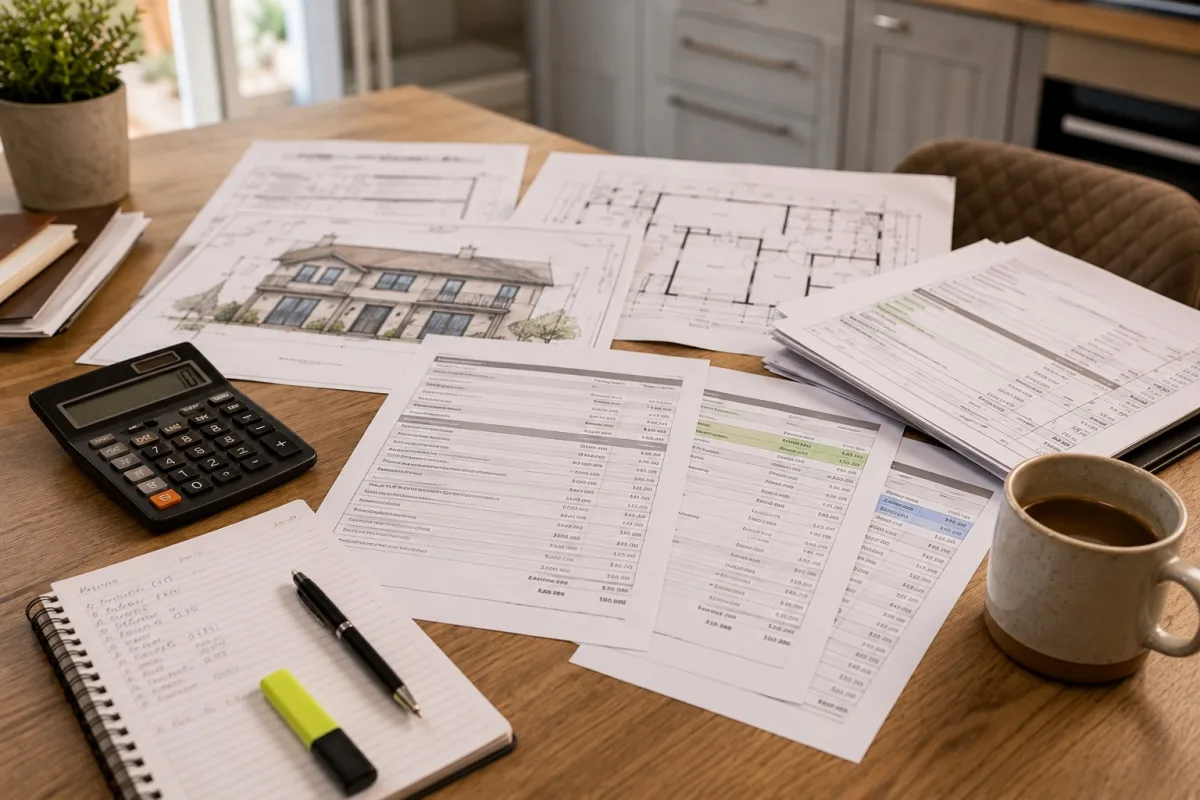
A good builder should provide a clear, itemised quotation that explains what is included.
For an extension, this might cover foundations, drainage, structural steel, brickwork, roofing, insulation, windows, doors, plastering, electrics, plumbing, decoration and making good.
The level of detail should be enough for you to understand where the money is going. If something is based on an allowance, such as kitchen units, bathroom fittings or tiles, that should be clearly stated.
Warning signs
Be cautious with short, vague quotes such as "extension works - £75,000".
A quote that lacks detail makes it difficult to compare builders and can leave room for disagreement later. Also watch out for quotes that seem much cheaper than others without a clear reason. Sometimes a low quote is missing important items.
5. What Is Excluded from Your Quote?
Knowing what is excluded is just as important as knowing what is included.
Some costs may not be part of the builder's price. These could include planning fees, Building Control fees, structural engineer fees, kitchen supply, bathroom fittings, flooring, decoration, landscaping or party wall matters.
If exclusions are not clear at the start, they can become expensive surprises later. Our structural engineer guide and Party Wall guide explain two common areas homeowners sometimes forget to budget for.
What a good answer looks like
A good builder should be upfront about exclusions.
They should clearly state what is not included and explain whether those items will need to be arranged by you, your architect, your project manager or another specialist.
For example, they might say: "The quote includes installation of the bathroom suite, but not the supply cost of the sanitaryware." That is clear and manageable.
Warning signs
Be wary of builders who brush over exclusions or say things like "we'll sort that out later" without putting anything in writing.
Unclear exclusions are one of the easiest ways for a project to run over budget.
6. Who Will Manage the Project Day-to-Day?
The person who sells you the job is not always the person who manages it.
On some projects, the builder you meet at the quote stage will be on site every day. On others, the work may be managed by a foreman, site manager or office-based coordinator.
There is nothing wrong with either approach, but you need to know who your main point of contact will be.
What a good answer looks like
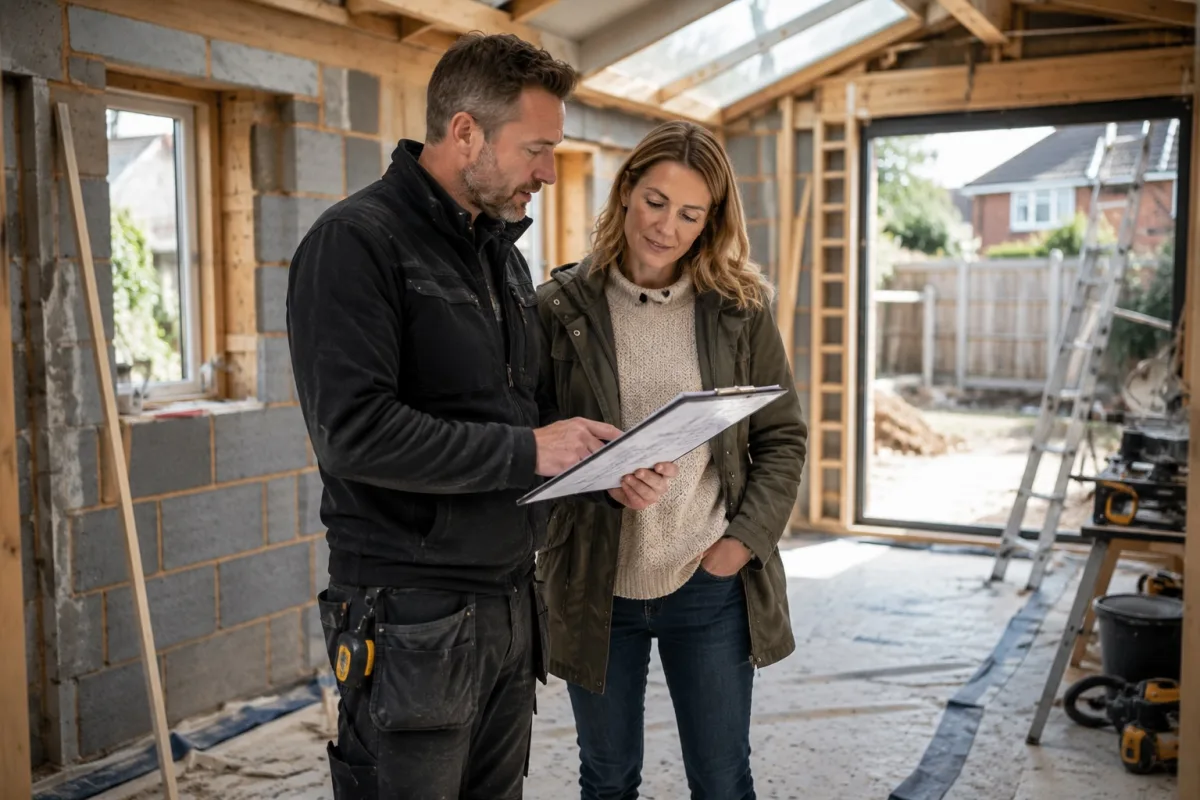
A good builder should explain how the project will be managed and who you will speak to day-to-day.
They should be clear about who will be on site, who makes decisions, and who has authority to agree changes.
For homeowners in Kent, London and the South East, where many projects involve tight access, parking restrictions and busy family homes, good day-to-day management is essential.
Warning signs
Warning signs include unclear answers, too many different contacts, or no obvious person taking responsibility.
If nobody is clearly managing the project, small issues can quickly become bigger problems.
7. What Is the Estimated Timeline?
Every homeowner wants to know how long the work will take.
While no builder can predict every delay, they should be able to give you a realistic estimated timeline based on the scope of work.
A timeline helps you plan around disruption, temporary accommodation, kitchen downtime, bathroom access, deliveries and key decisions.
What a good answer looks like
A good builder should provide an estimated start date, expected duration and key stages of the project.
For example: "Once we start on site, we expect the build to take around 16 weeks, subject to weather, Building Control inspections and any client variations."
That kind of answer is realistic. It gives you a timeframe without pretending everything is guaranteed.
Warning signs
Be careful if a builder promises an unrealistically short timescale just to win the job.
Also be cautious if they cannot explain how they reached the timeline or if they are vague about when they can start. A builder who is available immediately is not always a problem, but it is worth asking why.
8. How Are Variations Handled?
A variation is a change to the agreed work.
This could be something you request, such as adding roof lights, changing flooring or upgrading fixtures. It could also be something uncovered during the work, such as rotten timbers, hidden structural issues or drainage problems.
Variations are common in building projects, especially renovations and older properties. What matters is how they are handled.
What a good answer looks like
A good builder should have a clear process for variations.
Ideally, any change should be priced and agreed in writing before the work is carried out, unless it is an urgent safety issue.
You should understand:
- What is changing
- Why it is needed
- How much it will cost
- Whether it affects the timeline
This protects both you and the builder.
Warning signs
Be cautious if a builder says changes will be "sorted at the end".
That can lead to a painful final bill and arguments over what was agreed. Make sure the contract explains how variations are approved and recorded.
9. What Payment Schedule Do You Use?
Payment schedules are another area where homeowners need to be careful.
Most builders will require staged payments during the project. That is normal. However, the payment structure should be fair and linked to progress.
You should not be paying large sums far ahead of work being completed.
What a good answer looks like
A good payment schedule should be clear, staged and proportionate.
For example, payments might be linked to milestones such as foundations complete, structure complete, roof on, first fix complete, plastering complete and practical completion.
For smaller projects, the schedule may be simpler, but it should still be written down. A reasonable deposit may be needed to secure a start date or order specific materials, but this should be appropriate to the project.
Warning signs
Large upfront payments are a major red flag.
Be especially cautious if a builder asks for most of the money before starting or insists on cash payments without proper records. You should always know what each payment relates to.
10. Will You Provide a Written Contract?
A written contract protects both homeowner and builder.
It sets out what has been agreed, including the scope of work, price, payment schedule, timeline, responsibilities, variation process and what happens if something goes wrong.
For major home improvement projects, relying on a handshake or informal messages is risky.
What a good answer looks like
A good builder should be willing to use a written contract.
This does not always have to be complicated, but it should be clear. For larger projects, a recognised domestic building contract may be appropriate.
The contract should match the quote and any agreed specification. Before signing, take time to read it properly. Do not feel pressured to sign on the spot.
Warning signs
A builder who refuses to provide a written contract is a serious concern.
Also be careful if the contract does not match the quote, contains unclear payment terms, or leaves out important details. No written contract means less protection if there is a dispute.
11. How Do You Deal with Delays?
Delays can happen for many reasons.
Bad weather, late materials, Building Control inspections, design changes, structural discoveries and supply issues can all affect a building project.
The question is not whether delays are possible. They are. The question is how the builder deals with them.
What a good answer looks like
A good builder should explain how delays are communicated and managed.
They should be honest about risks and keep you updated if the programme changes. For example, if steel delivery is delayed or Building Control needs additional information, you should be told promptly.
Good communication helps you plan and reduces frustration.
Warning signs
Be cautious if a builder promises there will be no delays at all.
Also watch out for builders who blame everyone else, avoid updates, or only tell you about delays after the project has already slipped.
12. Do You Use Subcontractors?
Many builders use subcontractors for specialist trades such as electrics, plumbing, roofing, plastering, structural steel, windows or decorating. That is completely normal.
The important point is whether those subcontractors are properly managed and appropriately qualified.
What a good answer looks like
A good builder should be open about which parts of the work may be subcontracted.
They should explain how subcontractors are selected, managed and scheduled. For regulated work, such as electrical or gas work, the relevant trades should be suitably qualified and able to provide certificates where required.
Warning signs
Be careful if a builder is vague about who will be carrying out the work.
Also be cautious if different trades appear on site with no coordination, no clear schedule and no one taking responsibility. You are hiring the builder to manage the project, not just introduce you to a series of disconnected trades.
13. What Guarantees or Warranties Do You Offer?
Guarantees and warranties help you understand what happens after the work is complete.
Some products, such as windows, doors, boilers or roofing systems, may come with manufacturer warranties. Workmanship guarantees may also be offered by the builder.
You need to know what is covered, for how long, and what paperwork you will receive.
What a good answer looks like
A good builder should explain any guarantees clearly.
They should also provide relevant completion documents, certificates and warranty information at the end of the project.
For example, you may need Building Control completion certificates, electrical certificates, gas safety paperwork, product warranties and guarantees for installed items. These documents can matter if you sell your home later.
Warning signs
Be wary of vague promises such as "don't worry, we'll look after you" without anything in writing.
Also make sure you understand the difference between a builder's workmanship guarantee and manufacturer warranties for specific products.
14. How Will Communication Work During the Project?
Good communication can make a building project far less stressful.
Before work begins, you should agree how updates will be shared, how often you will meet, and how decisions will be recorded.
This is especially important if you are living in the property during the work.
What a good answer looks like
A good builder should have a clear communication process.
This might include weekly site meetings, regular phone updates, emails for key decisions, or a shared project folder for documents and photos.
You should know who to contact and how quickly you can expect a response. For busy homeowners in London, Kent and the South East, where work and family schedules can be demanding, this clarity is very helpful.
Warning signs
Poor communication before the project starts is often a sign of poor communication during the project.
If a builder is hard to reach, slow to reply or unclear when quoting, do not assume it will improve once they have the job.
15. What Happens If a Problem Arises?
Even well-run projects can face problems.
A wall may not be built as expected. A delivery may arrive damaged. A hidden issue may appear once old finishes are removed. A neighbour may raise a concern. A detail may need redesigning.
The best builders do not pretend problems never happen. They explain how they deal with them.
What a good answer looks like
A good builder should be calm, practical and transparent.
They should explain how issues are reported, discussed and resolved. They should be willing to put decisions in writing and involve the right professionals where needed, such as a structural engineer, architect or Building Control officer.
The aim should be to solve problems properly, not hide them or rush past them.
Warning signs
Be cautious if a builder becomes defensive when you ask this question.
Also watch out for anyone who says "we never have problems". Every real building project has challenges. What matters is honesty, skill and a clear process.
Red Flags to Watch Out For
When choosing a builder, the warning signs are not always obvious at first. Some builders are charming during the quote stage but become difficult once the project begins.
Here are some red flags to take seriously.
Large upfront payments
A reasonable deposit can be normal, especially if materials need to be ordered. But large upfront payments are risky.
If a builder wants a major percentage of the project cost before starting, ask why. Payments should usually be linked to progress.
Reluctance to provide references
A trustworthy builder should be able to provide recent references or examples of similar work.
If they avoid the question, become irritated or only provide vague testimonials, proceed carefully.
Vague quotations
A quote should be detailed enough for you to understand what is included.
Vague quotations make builder quote comparison almost impossible and can lead to disputes later.
Pressure selling
Be wary of phrases such as:
- "This price is only available today."
- "We can start tomorrow if you sign now."
- "I've got another customer waiting, so you need to decide quickly."
A good builder may have limited availability, but they should not pressure you into a major financial decision.
No written contract
For significant building work, a written contract is essential.
Without one, it becomes much harder to prove what was agreed.
Poor communication
If communication is poor before you sign, that is a warning.
Slow replies, missed appointments, unclear answers and disorganised paperwork can all point to problems later.
Your Builder Hiring Checklist
Before committing to a builder, use this UK builder checklist to make sure you have covered the basics.
- Check the builder has suitable insurance
- Ask for examples of similar completed projects
- Speak to recent references
- Compare detailed written quotes
- Confirm what is included in the price
- Confirm what is excluded from the price
- Understand who will manage the project day-to-day
- Agree an estimated timeline
- Ask how variations will be priced and approved
- Review the payment schedule
- Make sure there is a written contract
- Ask how delays will be communicated
- Check whether subcontractors will be used
- Confirm guarantees, warranties and certificates
- Agree how communication will work during the project
- Keep written records of important decisions
- Do not rush into signing under pressure
- Compare more than just the final price
This checklist is useful whether you are planning a single-storey extension, a loft conversion, a kitchen renovation or a larger home improvement project.
The goal is not to catch builders out. It is to make sure everyone is clear before the work begins.
Good builders usually welcome informed clients because clear expectations help the project run more smoothly.
Final Thoughts
Choosing a builder is not just about finding someone who can do the work. It is about finding someone you can trust with your home, your budget and your time.
Before signing a contract, take the time to ask proper questions, review the quote carefully, check references and understand how the project will be managed.
A few extra conversations at the beginning can save thousands of pounds, weeks of stress and a great deal of uncertainty later.
For homeowners in Kent, London and across the South East, where building projects often involve high property values, tight spaces, planning considerations and busy households, choosing carefully is especially important.
The cheapest quote is not always the best quote. The best builder is usually the one who is clear, experienced, properly insured, well organised and honest about what is involved.
If you are comparing builders or trying to understand whether a quote is fair, My Build My Way can help.
We help homeowners compare builders, review quotations and make informed decisions before committing to a project. Whether you are planning an extension, loft conversion, renovation or major home improvement, we can help you understand the detail before you sign.
Because when it comes to building work, confidence at the start makes the whole journey easier. Start your project enquiry here.
Related guides
10 Questions To Ask Before Hiring A Builder
Embarking on a home renovation project in South East England can be both exciting and daunting. The key to a successful build often lies in choosing the right builder. But how do y...
Finding a Builder in South East England
A practical guide to finding, checking and comparing builders across Kent, South London, Surrey, Sussex and the wider South East.
Builder Quotes Explained
Why builder quotes can differ by £50,000 or more, what homeowners should check, and how to compare building quotations properly before choosing a contractor.
Next steps
If you are planning work soon, these pages help you compare suitable builders and move forward with clearer quotes.